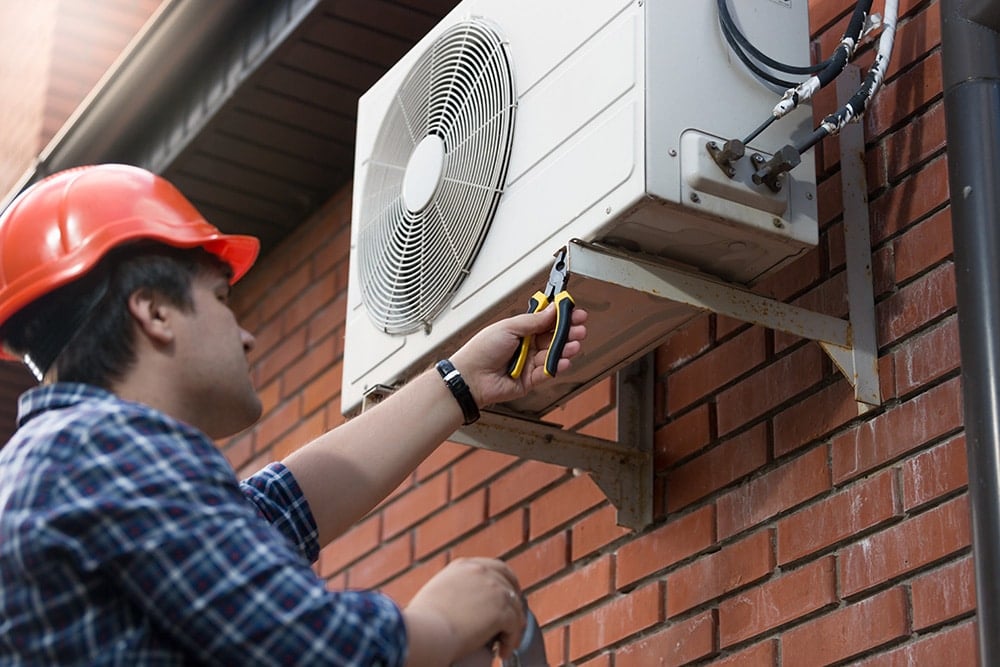
An outdoor central A/C condenser or ductless heat pump often needs 12 to 24 inches of open space around the sides and 48 to 60 inches of overhead clearance. Check the installation manual for your specific equipment because clearance requirements can vary by model.
Your outdoor unit absorbs heat from inside your home and transfers it outside through the condenser coil. If shrubs, fences, siding, or low decks block airflow, the unit cannot release that heat properly. This makes the compressor work harder and can cause the system to shut down during hot weather.
Side Clearance and Landscaping
Outdoor cooling units pull air through the sides of the cabinet. Keep the unit at least 12 inches from siding, brick, foundation walls, and fences. Leaving 18 to 24 inches provides better airflow and more room to inspect the equipment.
Plants need more space because they continue growing throughout the cooling season. Trim bushes, hedges, ornamental grasses, and other vegetation to maintain about two feet of open space around the cabinet.
Keep mulch, soil, and decorative stone below the equipment pad. Wet material resting against the cabinet holds moisture against the metal and can contribute to rust.
Overhead Clearance and Air Recirculation
Most central A/C condensers discharge warm air through a fan at the top of the cabinet. A low deck, staircase, roof overhang, or thick vegetation can trap this discharge air and direct it back toward the coil.
This is called air recirculation. The system pulls the warm exhaust air back through the coil instead of drawing in surrounding outdoor air. That can reduce performance and put additional strain on the compressor.
Maintain four to five feet of open space above the top fan unless the equipment manufacturer specifies otherwise. Trim nearby branches and inspect gutters above the unit. Leaves, dripping water, and winter ice can damage the fan, coil, or electrical components.
Service Access Panel Clearance
The service panel provides access to the system’s electrical components, refrigerant connections, and diagnostic ports. Technicians generally need 30 to 36 inches of clear, level space in front of this panel.
Fences and dense shrubs can make routine seasonal maintenance more difficult. They may prevent the panel from being removed or leave too little room to inspect and repair the equipment safely.
Spacing Between Multiple Outdoor Units
Homes with separate outdoor units for different floors or zones need enough space between the cabinets. Allow approximately two to three feet between units unless their installation manuals require more.
The units should not be positioned so one system directs warm discharge air toward another system’s intake. Proper separation helps each unit draw in outdoor air without interference.
Clearance for Cold-Climate Heat Pumps
A cold-climate heat pump needs enough ground clearance to remain above accumulated snow and allow defrost water to drain. The proper mounting height depends on the equipment and expected snow conditions at the property.
Wall brackets or snow stands are commonly used during a mini-split installation in New England. Outdoor units should also be positioned away from roof edges where falling snow or ice could strike the cabinet or fan assembly.
Seasonal Upkeep for Proper Airflow
Clear leaves, sticks, grass clippings, and other debris from around the equipment pad. Trim plants before they reach the cabinet or begin covering the coil.
If the exterior coil fins are coated with dirt or pollen, they may be rinsed gently with a garden hose when permitted by the equipment manufacturer. Do not use a pressure washer. High-pressure water can bend the thin metal fins and restrict airflow.
Check the equipment pad for settling or movement. If the unit is leaning, do not attempt to lift or reposition it yourself. Moving the cabinet can damage the refrigerant lines or electrical connections.
Professional A/C Maintenance and Placement Support
If your outdoor unit is crowded, leaning, running constantly, or difficult to access, N.E.T.R., Inc. can inspect the installation and explain the available options. Reach out to N.E.T.R., Inc. online to request service or schedule a system walkthrough.